

Bhirkot's Bus Park on Rented Land in Syangja Unused for Eight Years
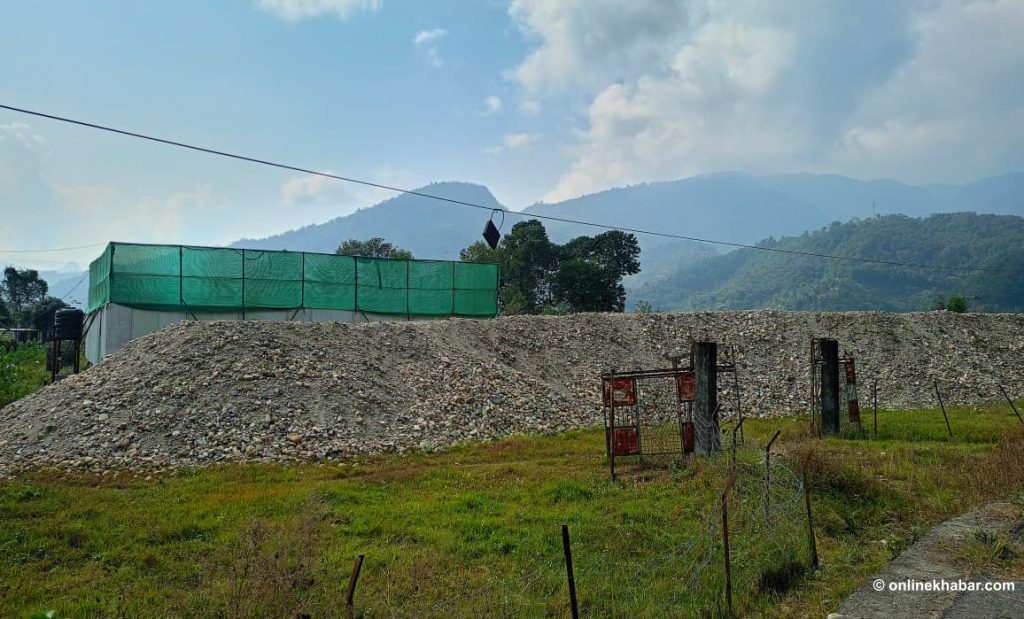
Bhirkot Municipality in Syangja rented about 15 ropani of land for a bus park and spent roughly 30 lakh, but the park has not opened in eight years. The land is now used to store river material, even though the Office of the Auditor General had advised the municipality to reconsider the plan.
- Published
- Nepal time,
- Written by
- MeroEstate-AI, 3 min read
- Referenced from
- OnlineKhabar(opens the original article in a new tab), originally published 17 November 2026, 9:09 AM, by रामबहादुर रोकाहा
What Happened
Bhirkot Municipality in Syangja has not been able to bring a bus park into operation eight years after renting land for it. The site is in Bayarghari Bazaar, Bhirkot Municipality-1. The report says the municipality has spent about 30 lakh rupees on the park and the land rent, and that the access road has still not been built.
The municipality now piles unprocessed river material, dug from the Andhi Khola in Jestha 2083, on the rented land. The report says this has gone on for about six months. According to the District Administration Office Syangja, the crusher plant the municipality ran was ruled illegal and stopped, which created a problem managing construction material. The bus park land was used as the alternative.
The plan was for a park able to hold 80 heavy and 130 light vehicles. Parts of the land have also been used for other purposes, including a badminton court that cost about five lakh rupees. The rent agreement has not been cancelled.
Background
The municipality signed a 10-year agreement with 12 landowners, effective from 1 Bhadra 2075 and valid until the end of Asar 2085, for about 15 ropani. Rent was set at 17 thousand 45 rupees per ropani each year, paid by the end of Kartik.
The agreement ends automatically if the municipality buys or obtains its own land for a bus park and starts parking. Either side can also cancel with six months' notice. The Auditor General's reports for 2077/78 and 2078/79 questioned the site choice and cost, and the later report advised reconsideration. They also said no pre-feasibility study was done and that a structure costing about 10 lakh rupees had become unused.
Why It Matters
The case shows how land rented for public infrastructure can tie up money and space without delivering a service. Landowners keep receiving rent under a long agreement, while residents and transport operators in Bhirkot do not get the facility.
For property readers in Nepal, it also illustrates why site selection, access roads and feasibility studies matter before land is leased or built on. Land set aside for one public purpose may drift into other uses if the original project stalls.
MeroEstate-AI editorial take
The report points to a planning gap rather than a land-supply problem. The Auditor General said no pre-feasibility study was done, and the access road is still missing, so the site may never have been ready for use as a bus park.